Auto Parts: Tracking BOMs and Quality Across Suppliers
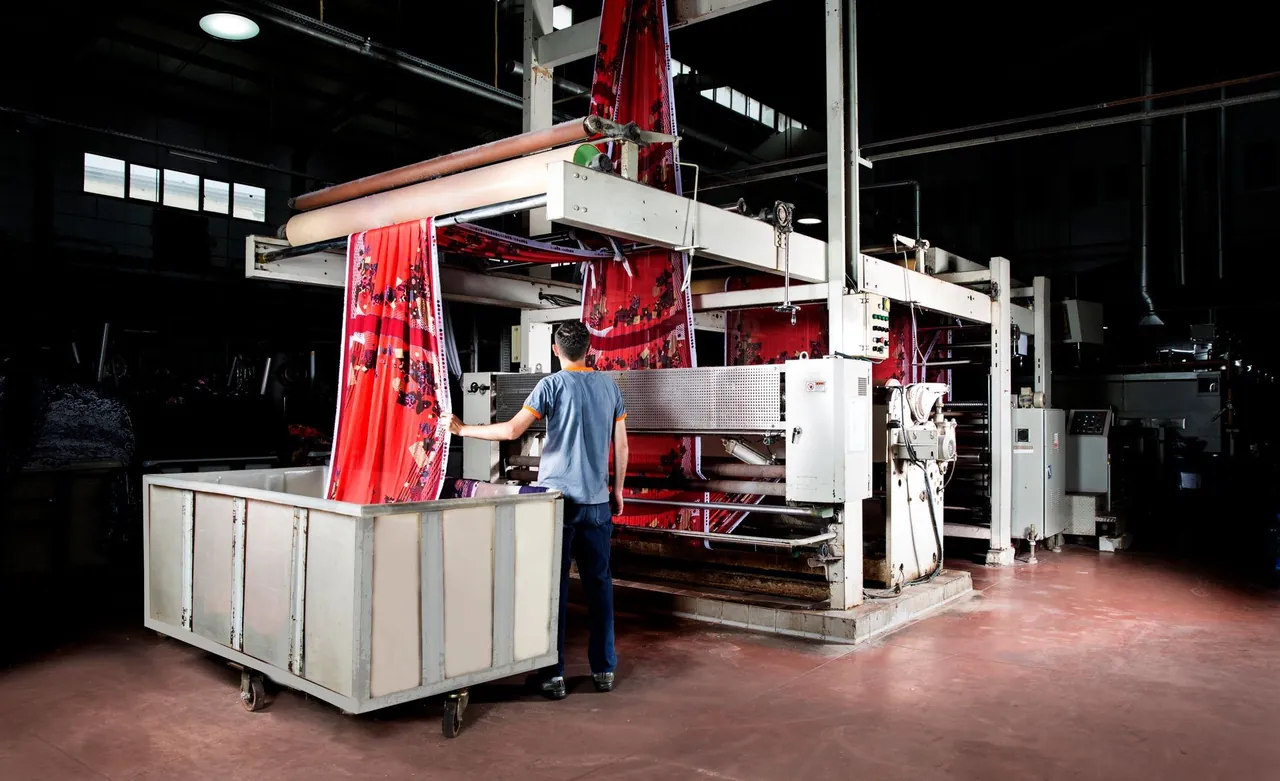
The Automotive Component Industry: Precision at Scale
India's automotive component industry is valued at over $70 billion and growing. From Tier-1 suppliers working directly with OEMs to Tier-3 companies producing basic machined parts, the sector employs millions of people and demands exceptional operational discipline. A single defective component can halt an OEM's production line, triggering penalties that dwarf the value of the part itself.
This is an industry where ERP is not a back-office tool. It is the nervous system of the operation. Bill of Materials accuracy, supplier quality tracking, and production traceability are not features to evaluate. They are survival requirements.
Multi-Level BOM Management

Auto parts are rarely simple components. A brake assembly might contain dozens of sub-components, each with its own BOM. Managing these multi-level BOMs accurately is the foundation of automotive manufacturing.
BOM Challenges in Auto Parts Manufacturing
- Engineering changes: OEMs issue engineering change notices (ECNs) frequently. Your BOM must be versioned, and you need to track which revision each production run used
- Part number management: OEM part numbers, your internal part numbers, and supplier part numbers must all be cross-referenced accurately
- Alternate components: When the primary raw material or component is unavailable, the system must identify approved alternatives and track their usage
- Effectivity dates: BOMs change over time. You need to know which BOM version was active for any given production date
- Phantom assemblies: Sub-assemblies that are produced and consumed in the same process without being stocked independently
SAP Business One supports multi-level BOMs natively, including revision management, alternate items, and phantom assemblies. For automotive-specific requirements like ECN tracking with effectivity dates, the system can be configured to maintain a complete revision history.
BOM Costing
Accurate BOM costing is critical for quoting new business. Auto parts manufacturers operate on thin margins, and a costing error of even 2-3% can turn a profitable order into a loss-making one. SAP B1's BOM costing rolls up material costs, labour costs, and overheads across all BOM levels to give you the true cost of production.
Supplier Quality Management
An auto parts manufacturer is only as good as its suppliers. If your raw material or bought-out component supplier delivers sub-standard material, your production quality suffers, and your OEM customer bears the consequences. This is why automotive quality standards like IATF 16949 place enormous emphasis on supplier management.
Incoming Quality Inspection
Our QC Addon for SAP B1 supports the rigorous incoming inspection requirements of automotive manufacturing:
- Sampling plans: Configure sampling plans based on AQL (Acceptable Quality Level) standards, with skip-lot provisions for proven suppliers
- Dimensional inspection: Record dimensional measurements against drawing specifications for machined and fabricated components
- Material testing: Track test certificates for raw materials: chemical composition, hardness, tensile strength
- Visual inspection: Document surface finish, plating quality, and appearance checks
- Supplier rating: Automatically calculate supplier quality ratings based on incoming inspection history
Supplier Scorecard
A comprehensive supplier scorecard in SAP B1 tracks performance across multiple dimensions:
- Quality: PPM (Parts Per Million) defect rate, lot rejection rate, customer complaints traced to supplier material
- Delivery: On-time delivery percentage, lead time adherence, quantity accuracy
- Responsiveness: Corrective action response time, documentation compliance
- Cost: Price competitiveness, price stability, total cost of ownership
Production Traceability
OEMs require complete traceability for safety-critical components. If a field failure occurs, you must be able to trace the failed part back to its production batch, the raw materials used, the machine it was produced on, and the operator who ran the machine.
- Batch/serial tracking: Track production in batches or individual serial numbers depending on part criticality and volume
- Machine tracking: Record which machine or production cell produced each batch
- Operator tracking: Log operator assignments for each production run
- Process parameters: Record key process parameters (pressure, temperature, cycle time) per batch
- Raw material linkage: Link each production batch to the specific raw material batches consumed
Quality Management System Integration
Auto parts manufacturers typically operate under IATF 16949, the automotive quality management standard. Your ERP must support the core processes defined in this standard:
APQP (Advanced Product Quality Planning)
When launching a new product, APQP defines a structured process from concept through production validation. SAP B1 helps manage the production planning aspects: BOM creation, process routing, capacity planning, and pilot run tracking.
PPAP (Production Part Approval Process)
Before shipping production quantities, you must submit a PPAP package to the OEM. This includes dimensional reports, material certifications, process flow diagrams, and capability studies. The QC Addon helps generate several PPAP elements from production data: dimensional inspection reports, material test results, and process capability analyses.
FMEA and Control Plans
Failure Mode and Effects Analysis (FMEA) identifies potential failure modes and their effects. Control plans define the inspection and monitoring actions required to prevent these failures. The QC Addon implements control plan requirements as inspection checkpoints in the production process.
Jobwork in Auto Parts Manufacturing
Many auto parts manufacturers outsource specific processes: heat treatment, surface coating, machining of certain features. Managing these subcontracted operations requires the same rigour as in-house production. Our Jobwork Addon for SAP B1 tracks material sent to sub-contractors, monitors processing times, and ensures quality inspection of returned goods.
GST and Documentation
Automotive component companies deal with complex GST scenarios: multiple HSN codes, interstate and intrastate supplies, jobwork transactions, and capital goods transfers. SAP B1 handles these natively, and our EInvoice and EWayBill add-ons automate compliance documentation.
Why SAP Business One for Auto Parts
SAP Business One is widely used in the automotive component sector because it offers the right combination of manufacturing depth, quality management capabilities, and scalability. As a Tier-2 or Tier-3 supplier, you get an ERP platform that your OEM customers recognise and trust, at a price point that makes sense for mid-sized manufacturers.
If you manufacture auto parts and need better control over BOMs, supplier quality, and production traceability, start with a free assessment. We understand the automotive component industry and can configure SAP B1 to meet your OEM requirements.
Written by the Indivar team
Consultants and engineers delivering business process, security and infrastructure work since 2009: 30+ years of senior architecture experience, SAP Partner since 2015.